
Introduction
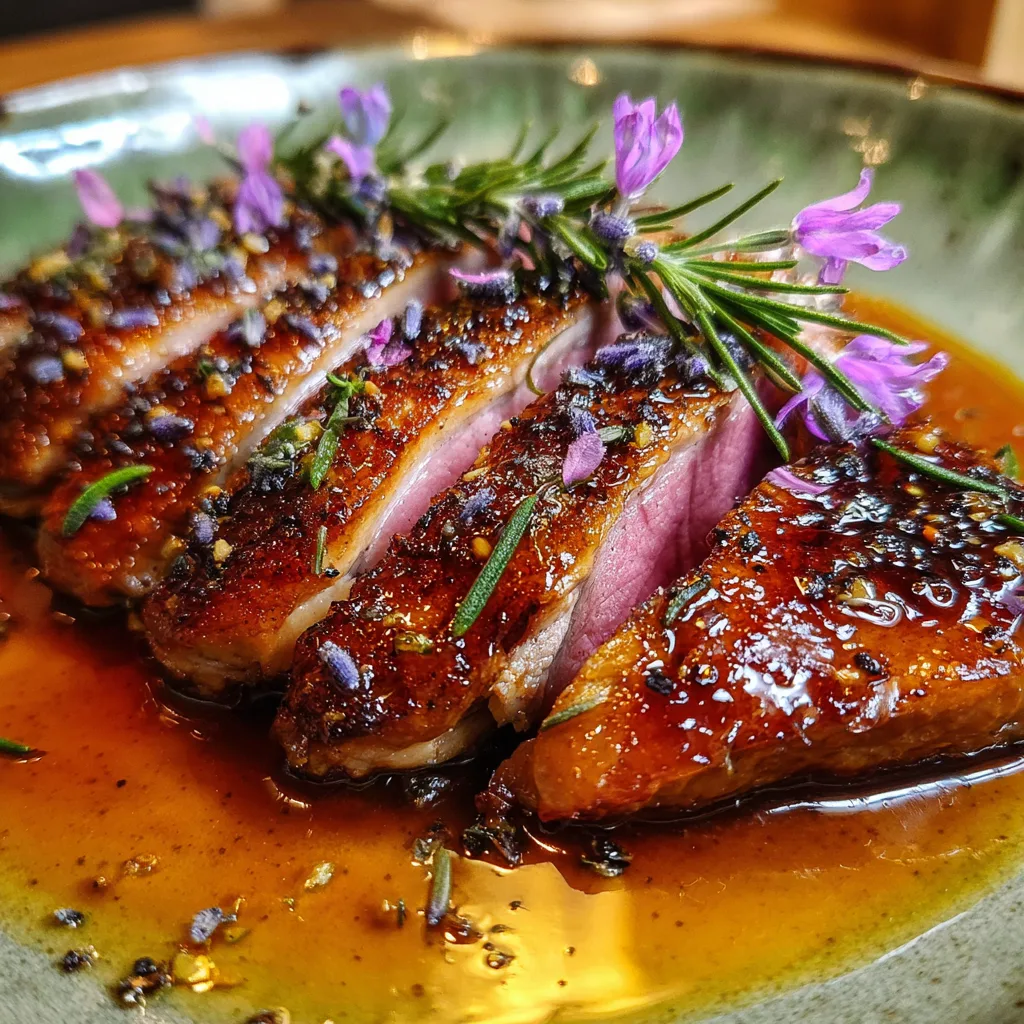
Duck Breast with Lavender Honey Glaze is a refined dish that combines crispy, golden skin with tender, juicy meat and a delicate floral sweetness. Duck naturally has a rich, savory flavor, and pairing it with a lightly infused lavender honey glaze creates a beautiful balance between depth and brightness. The first time I prepared duck breast, I was surprised by how simple the technique was once I learned to render the fat properly. When I experimented with a small pinch of culinary lavender in warm honey, the subtle floral aroma elevated the dish without overpowering it. This recipe feels restaurant-worthy, yet it relies on straightforward ingredients and careful cooking rather than complicated steps. Perfect for date nights, special celebrations, or an elegant dinner at home, Duck Breast with Lavender Honey Glaze delivers sophistication in every bite.
Print
Duck Breast with Lavender Honey Glaze – Elegant, Aromatic, and Perfectly Seared
- Total Time: 25 minutes
- Yield: 2 servings
Description
Duck Breast with Lavender Honey Glaze is an elegant main course featuring crispy, pan-seared duck breast finished with a delicate floral honey glaze infused with culinary lavender. Rich, aromatic, and perfectly balanced between sweet and savory, it’s ideal for special occasions.
Ingredients
- 2 duck breasts, skin on
- 1 teaspoon salt
- 1/2 teaspoon black pepper
- 1/2 teaspoon dried culinary lavender
- 1/4 cup honey
- 1 tablespoon balsamic vinegar
- 1 tablespoon fresh lemon juice
- 1 teaspoon fresh thyme leaves (optional)
Instructions
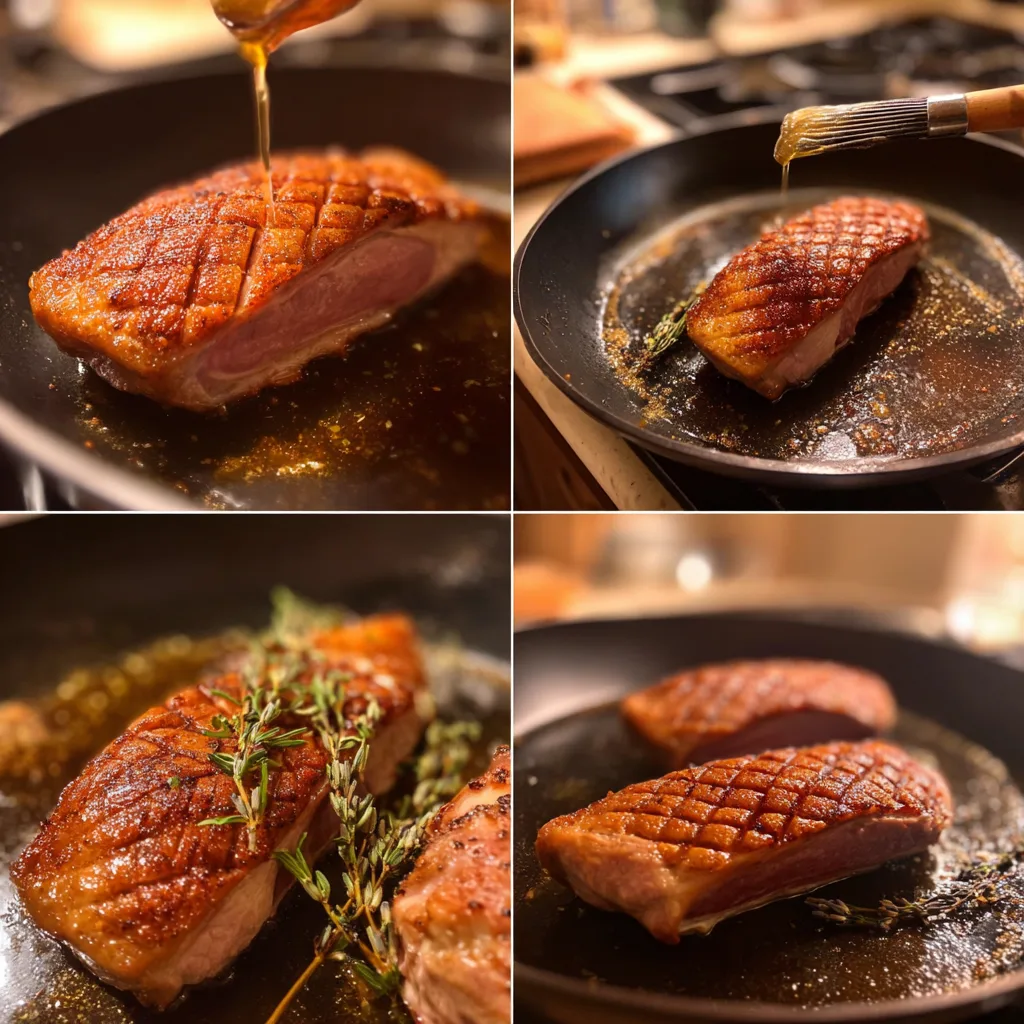
- Score the skin of the duck breasts in a crosshatch pattern, being careful not to cut into the meat. Season both sides with salt and pepper.
- Place duck breasts skin-side down in a cold skillet. Turn heat to medium and cook for 6–8 minutes, allowing fat to render and skin to become crispy.
- Flip and cook for another 4–6 minutes, or until internal temperature reaches 130–135°F (54–57°C) for medium-rare. Remove and rest for 5–10 minutes.
- In a small saucepan, gently warm honey, lavender, balsamic vinegar, and lemon juice over low heat for 2–3 minutes. Do not boil.
- Strain glaze if desired for a smoother texture.
- Slice duck breast thinly and drizzle with lavender honey glaze.
- Garnish with fresh thyme if using and serve immediately.
Notes
- Use culinary-grade lavender only.
- Do not overcrowd the pan to ensure crispy skin.
- Duck pairs well with roasted root vegetables or mashed potatoes.
- Resting the duck ensures juicy slices.
- Prep Time: 10 minutes
- Cook Time: 15 minutes
- Category: Main Course
- Method: Pan-Sear
- Cuisine: French
Why You’ll Love This Recipe
This recipe offers crisp skin, tender meat, and a beautifully balanced glaze. It feels luxurious yet approachable, with simple ingredients that create a memorable flavor profile. The lavender honey adds subtle floral sweetness that enhances, rather than masks, the richness of the duck.
Ingredients
(Tip: You can find the complete list of ingredients and their measurements in the recipe card below.)
Ingredients Breakdown
Duck breasts (skin-on)
The star of the dish. Skin-on duck breasts allow the fat to render, creating a crisp exterior and juicy interior.
Salt
Enhances the natural flavor of the duck and helps draw out moisture for crisp skin.
Black pepper
Adds subtle warmth and balance.
Honey
Forms the base of the glaze, providing natural sweetness and caramelization.
Culinary lavender
Infuses the honey with a delicate floral aroma. Use sparingly to avoid overpowering the dish.
Fresh lemon juice
Adds brightness and balances the sweetness of the glaze.
Butter
Enriches the glaze and adds a silky finish.
Fresh thyme (optional)
Adds a subtle herbal note that complements both duck and lavender.
Directions
Remove the duck breasts from the refrigerator about 20 minutes before cooking. Pat them dry thoroughly with paper towels. Using a sharp knife, score the skin in a crosshatch pattern, being careful not to cut into the meat. Season generously with salt and black pepper.
Place the duck breasts skin-side down in a cold, dry skillet. Turn the heat to medium and allow the fat to render slowly. Cook for 6–8 minutes, draining excess fat if necessary, until the skin becomes golden and crisp.
Flip the duck breasts and cook for an additional 4–6 minutes for medium-rare, or until the internal temperature reaches about 130–135°F (54–57°C). Remove from the pan and let rest for 8–10 minutes.
Meanwhile, prepare the glaze. In a small saucepan over low heat, gently warm the honey. Stir in a small pinch of culinary lavender and allow it to infuse for a few minutes. Strain if desired for a smoother texture. Add lemon juice and butter, stirring until combined and slightly thickened.
Slice the rested duck breast thinly and drizzle the lavender honey glaze over the top. Garnish with fresh thyme if desired and serve immediately.
Equipment needed : Must-Have Tools to Get Rolling
Here’s what you’ll want to have on hand:
Silicone Spatula – Durable, heat-resistant silicone spatula perfect for mixing, scraping, and spreading. Gentle on non-stick cookware and easy to clean.
Large pot – You’ll need this to boil the whole cabbage head and soften the leaves.
large bowl –Spacious, durable large bowl ideal for mixing, serving, or food preparation. Made from sturdy material and easy to clean.
Sharp knife – For coring the cabbage and slicing out the thick stem in each leaf. A paring knife works best.
Mixing bowl – A big bowl makes it easier to combine your meat and rice filling evenly.
Cutting board – For prepping cabbage leaves and rolling them like a pro.
Full-Size Blender – is a powerful kitchen appliance for making smoothies, soups, and sauces in large batches.
3-in-1 Air Fryer – This versatile 3-in-1 air fryer offers Air Fry for healthier meals with less oil, Bake for bakery-quality desserts and treats, and Reheat to bring leftovers back to life with crispy, flavorful result
Servings and timing
Servings: 2–3
Preparation time: 10 minutes
Cooking time: 15 minutes
Resting time: 10 minutes
Total time: 35 minutes
Storage/reheating
Store leftover duck in an airtight container in the refrigerator for up to 2 days. Reheat gently in a skillet over low heat to avoid overcooking. The glaze can be reheated separately over low heat. For best texture, this dish is ideally enjoyed fresh.
Variations and Customizations
Duck Breast with Lavender Honey Glaze can be customized to suit your preferences. For a deeper flavor, add a splash of balsamic vinegar to the glaze, which pairs beautifully with honey and duck.
I have also added a pinch of crushed pink peppercorns to the glaze for subtle spice and visual appeal. If you prefer a more citrus-forward profile, substitute orange juice for lemon juice.
For a savory balance, serve the duck with roasted root vegetables or creamy mashed potatoes. You can also prepare a pan sauce by deglazing the skillet with a small amount of chicken stock before incorporating it into the glaze.
If lavender is not available, substitute a small amount of rosemary or thyme for a different herbal note while maintaining sophistication.
Finally, ensure the lavender used is culinary grade, as ornamental varieties may be too strong or unsuitable for consumption.
Nutrition and Dietary Info
Approximate nutrition per serving (based on 3 servings):
| Nutrient | Amount per Serving |
|---|---|
| Calories | 460 kcal |
| Protein | 28 g |
| Carbohydrates | 12 g |
| Fat | 34 g |
| Saturated Fat | 12 g |
| Fiber | 0 g |
| Sugar | 11 g |
| Sodium | 420 mg |
Values are estimates and may vary depending on ingredient brands and portion sizes.
Expert Tips & Customizations
Start with a Cold Pan
Rendering the fat slowly ensures crisp, evenly cooked skin.
Do Not Overcook
Duck breast is best served medium-rare to maintain tenderness.
Use Lavender Sparingly
A small amount delivers aroma without bitterness.
Allow Proper Resting
Resting keeps the juices inside the meat when slicing.
FAQs
How do I know when the duck is done?
Use a meat thermometer. Medium-rare is achieved at about 130–135°F.
Can I make the glaze ahead of time?
Yes, gently reheat before serving.
What sides pair well with this dish?
Roasted vegetables, mashed potatoes, or a simple arugula salad complement it well.
Can I substitute maple syrup for honey?
Yes, though the flavor will be slightly different and less floral.
Why is my duck skin not crispy?
Ensure the skin is dry before cooking and allow sufficient time for fat rendering.
Is lavender safe to eat?
Yes, when using culinary-grade lavender in small amounts.
Conclusion
Duck Breast with Lavender Honey Glaze is a sophisticated dish that balances rich, crispy duck with delicate floral sweetness. With careful technique and simple ingredients, this recipe delivers elegant results suitable for special occasions or refined home dining. Its combination of texture, aroma, and flavor makes it a memorable centerpiece for any meal.
Hungry for more? Visit our website for full recipes and follow us on Pinterest for daily foodie inspo you’ll love to pin!